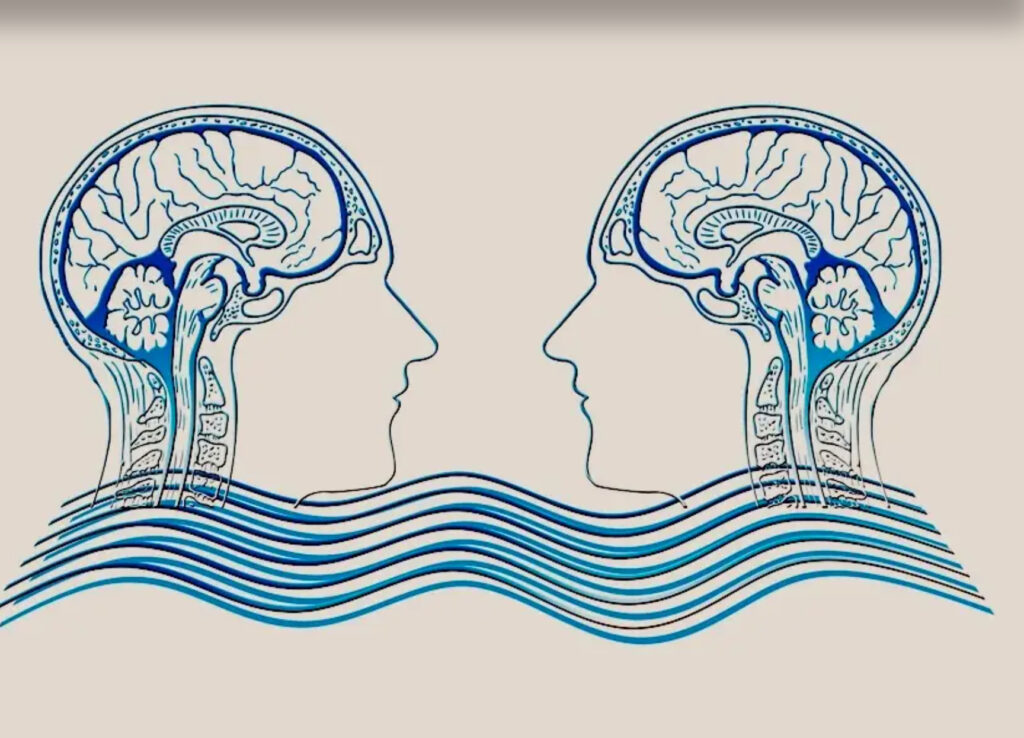
Humanity has always been fascinated by powers beyond the ordinary — the ability to read minds, move objects without touching them, see distant places, or predict the future. Throughout history, claims of telepathy, telekinesis, psychic phenomena, and remote viewing have captured the imagination of believers and skeptics alike. But are these abilities real, or do they belong to the realm of myth and illusion? Exploring their origins, scientific studies, and cultural significance reveals a nuanced picture of hope, mystery, and rigorous skepticism.
Telepathy: The Dream of Mind-to-Mind Communication
Telepathy, or the transfer of thoughts from one person to another without using known senses, has deep roots in folklore, mysticism, and religion. Ancient cultures often attributed telepathic communication to shamans or spiritual leaders who claimed communion with spirits or gods.
In the modern era, telepathy entered scientific discussion through the Society for Psychical Research (SPR) in the late 19th century. Researchers like Frederic W.H. Myers and William Barrett conducted experiments in which “senders” attempted to transmit images or words to “receivers” in separate rooms. Some results seemed statistically significant, sparking public curiosity.
However, controlled experiments have repeatedly failed to produce consistent evidence. Notably, J.B. Rhine’s card-guessing studies at Duke University in the 1930s initially showed promise, but replication attempts revealed flaws in methodology and statistical interpretation. Today, neuroscience offers no known mechanism for telepathic transmission — the brain’s electromagnetic signals are far too weak and localized to transmit readable thoughts.
Still, telepathic-like experiences occur. Emotional attunement between loved ones, intuition, or coincidences may feel telepathic but are more likely explained by subconscious cues, shared experiences, or probability. In scientific terms, telepathy remains unproven, though it persists as a metaphor for deep human connection.
Telekinesis: Mind Over Matter
Telekinesis (or psychokinesis) refers to moving or manipulating objects with mental focus alone. Pop culture, from Star Wars to Stranger Things, portrays it as a dramatic power, but claims of real-world telekinesis are far more modest.
In the 1970s, psychic Uri Geller captivated audiences by bending spoons on television, claiming mental power. Skeptics, including magician James Randi, demonstrated identical effects using sleight of hand, revealing that many “psychic” feats are stage illusions, not supernatural acts.
Scientific studies, including those at the Princeton Engineering Anomalies Research (PEAR) Lab, investigated whether mental intention could influence random number generators or physical systems. After decades, PEAR’s results were statistically tiny and not replicable, suggesting no reliable evidence for psychokinesis.
From a physics standpoint, telekinesis would require the mind to generate forces powerful enough to move matter — an energy output far beyond what the brain produces. Thus, mainstream science classifies telekinesis as fiction, though it continues to inspire spiritual and philosophical discussions about consciousness and energy.
Psychics: Prophets, Mediums, and Intuitive Healers
The term psychic encompasses a wide range of claimed abilities: clairvoyance (seeing beyond normal vision), precognition (foreseeing future events), and mediumship (communicating with the dead). Psychics appear in nearly every culture — from the Delphic Oracle of ancient Greece to modern television mediums.
The appeal of psychics lies in their promise of comfort, guidance, and meaning. People seek them in times of grief or uncertainty. Many psychics rely on cold reading — a technique where vague statements, body language cues, and probability create the illusion of supernatural knowledge.
Scientific tests consistently show that psychics fail under controlled conditions. The James Randi Educational Foundation offered a $1 million prize to anyone who could demonstrate psychic abilities under proper testing — no one ever succeeded. Skeptical inquiry finds that most psychic readings can be explained by psychological suggestion, confirmation bias, and selective memory.
Nonetheless, some individuals report intuitive flashes or dreams that seem predictive. Psychology suggests these can arise from subconscious pattern recognition, coincidence, or self-fulfilling prophecies. While such experiences can feel profound, they are not reliable evidence of extrasensory perception (ESP).
Thus, while psychic phenomena remain culturally significant and personally meaningful for many, they lack scientific validation and are best viewed as symbolic or interpretive rather than literal.
Remote Viewing: The Government’s Psychic Spy Program
Remote viewing claims the ability to perceive distant or unseen targets — such as hidden locations or objects — using only the mind. Unlike mystical traditions, remote viewing became a subject of serious government study.
During the Cold War, U.S. intelligence agencies funded the Stargate Project, fearing the Soviet Union might exploit psychic abilities for espionage. Researchers at Stanford Research Institute (SRI), including Russell Targ and Harold Puthoff, conducted experiments in which participants described remote targets. Some results were intriguing, describing general shapes or features.
However, later reviews by the CIA and independent scientists found methodological weaknesses and inconsistent accuracy. When properly blinded and controlled, remote viewing success rates matched chance expectation. The Stargate Program was terminated in 1995, with officials concluding that no actionable intelligence came from psychic spying.
Today, remote viewing is largely regarded as a psychological phenomenon — a blend of imagination, intuition, and suggestion. It remains popular in fringe communities but unrecognized in scientific or military practice.
Why People Believe
Despite the lack of proof, belief in psychic abilities is widespread. Surveys show that 30–50% of Americans believe in telepathy or clairvoyance. Several factors explain this enduring faith:
- Cognitive biases: Humans are pattern-seeking creatures; we notice hits and forget misses.
- Emotional comfort: Psychic beliefs offer hope, control, and meaning in uncertainty.
- Cultural reinforcement: Media portrayals normalize paranormal abilities as real possibilities.
- Personal experiences: Coincidences or intuitive insights feel convincing, even if explainable by chance.
From an anthropological perspective, psychic beliefs reflect deep human desires — to transcend limits, understand others, and access hidden knowledge.
The Scientific Verdict
Across decades of research in parapsychology, no phenomenon — telepathy, telekinesis, psychic vision, or remote viewing — has been demonstrated reliably and reproducibly under controlled, blinded conditions. Science relies on repeatable evidence, causal mechanisms, and falsifiability; psychic phenomena consistently fail these criteria.
That said, dismissing them entirely may overlook their psychological and cultural value. Experiences labeled “psychic” often reveal intuition, empathy, or creativity — genuine human faculties that can feel magical, even if not supernatural.
Between Wonder and Skepticism
Telepathy, telekinesis, psychics, and remote viewing occupy a gray zone between belief and evidence. While captivating stories and subjective experiences abound, scientific scrutiny finds no verifiable proof of these powers. They remain fiction in a literal sense — but real as symbols of humanity’s longing to expand awareness and connect beyond the self.
Perhaps the lesson lies not in disproving the mystical, but in recognizing the mystery within the mind itself. Consciousness, intuition, and imagination are profound frontiers — and though we may not move objects or read thoughts, the power of human perception and empathy can indeed move hearts and minds.
Real-World Examples of Claimed Psychic Abilities
Throughout history, numerous individuals have claimed extraordinary mental powers such as telepathy, telekinesis, clairvoyance, and remote viewing. While scientific scrutiny has rarely confirmed these abilities under controlled conditions, some cases remain culturally significant or mysterious enough to spark ongoing debate.
Uri Geller – The Spoon Bender
Perhaps the most famous modern example of alleged telekinesis, Uri Geller rose to international fame in the 1970s. He claimed to bend metal objects, especially spoons, using only the power of his mind. Geller also said he could influence compasses and repair broken watches psychically.
Television audiences were captivated, but skeptics like James Randi, a professional magician, replicated Geller’s feats using sleight of hand, suggesting no supernatural force was required. When tested under controlled laboratory conditions — with strict supervision and no opportunity for manipulation — Geller’s abilities often failed to manifest. Despite the criticism, Geller maintains his powers are genuine, and his performances continue to draw interest worldwide.
Nina Kulagina – Soviet Psychic
During the Cold War, Russian housewife Nina Kulagina was reportedly able to move small objects, such as matches and salt shakers, across tables without touching them. Soviet scientists filmed her demonstrations, and the footage became a sensation in the 1960s.
Though the Soviet Union initially treated her abilities as a potential military asset, Western analysts who reviewed the tapes suggested that hidden strings, magnets, or air currents could explain the movements. With limited independent verification, her case remains unproven, though it fueled decades of curiosity about psychokinesis in Eastern bloc research.
Ingo Swann – Remote Viewer
Ingo Swann, an artist and writer, was a central figure in the U.S. government’s Stargate Project, which researched remote viewing for intelligence gathering. Swann claimed he could describe distant targets, including a secret military installation and even features of the planet Jupiter before the NASA flyby confirmed them.
While some of Swann’s descriptions were strikingly accurate, follow-up reviews by the CIA concluded that the data gathered through remote viewing was too vague and inconsistent for actionable use. Still, Swann’s contributions helped shape public interest in psychic espionage and are often cited by proponents of extrasensory perception.
Edgar Cayce – The Sleeping Prophet
Born in 1877, Edgar Cayce gained fame for entering trance states and delivering psychic readings on health, past lives, and future events. Known as the “Sleeping Prophet,” he reportedly provided medical diagnoses and treatments unknown to him while awake.
Although some clients claimed miraculous recoveries, no systematic evidence supported the accuracy of his readings. Today, the Edgar Cayce Foundation preserves his transcripts, and many view him as a spiritual rather than scientific phenomenon.
Joseph McMoneagle – Military Remote Viewer
Another key participant in the Stargate Project, Joseph McMoneagle received a Legion of Merit award for his intelligence contributions. He claimed to have identified hidden locations and foreign technologies through remote viewing sessions. While supporters cite his hits, skeptics note that many descriptions were generalized and unverifiable.
Though these figures remain iconic in the world of the paranormal, none have withstood rigorous scientific testing. Their stories illustrate humanity’s enduring fascination with unseen powers — blending mystery, psychology, and the quest for understanding beyond the limits of known science.
In Conclusion
Throughout history, people have claimed extraordinary abilities like telepathy (mind-to-mind communication), telekinesis (moving objects mentally), psychic powers (clairvoyance, precognition), and remote viewing (seeing distant places). Figures such as Uri Geller (spoon bending), Nina Kulagina (moving objects), Edgar Cayce (psychic readings), Ingo Swann, and Joseph McMoneagle (remote viewing for the U.S. military) captured public imagination. Despite intriguing anecdotes and government interest, scientific testing consistently fails to confirm these abilities under controlled conditions. Explanations often involve illusion, intuition, coincidence, or psychological suggestion. While unproven, such phenomena reflect humanity’s deep desire to transcend limits, understand consciousness, and explore mysteries beyond the material world.
Additionally, Neuroscience Research Institute is on the cutting edge of advanced research and modern treatment methods. If you or someone you know is struggling with a mental health issue or substance abuse related to mental illness contact us today and our programs will set you on the path of long term recovery.